Panning technique in motorsport photography: This is how to capture speed
Cars that look parked in your photos are a matter of shutter speed and movement, not equipment. Which shutter speeds work, how to stand and rotate, and the mistakes everybody makes at the start.
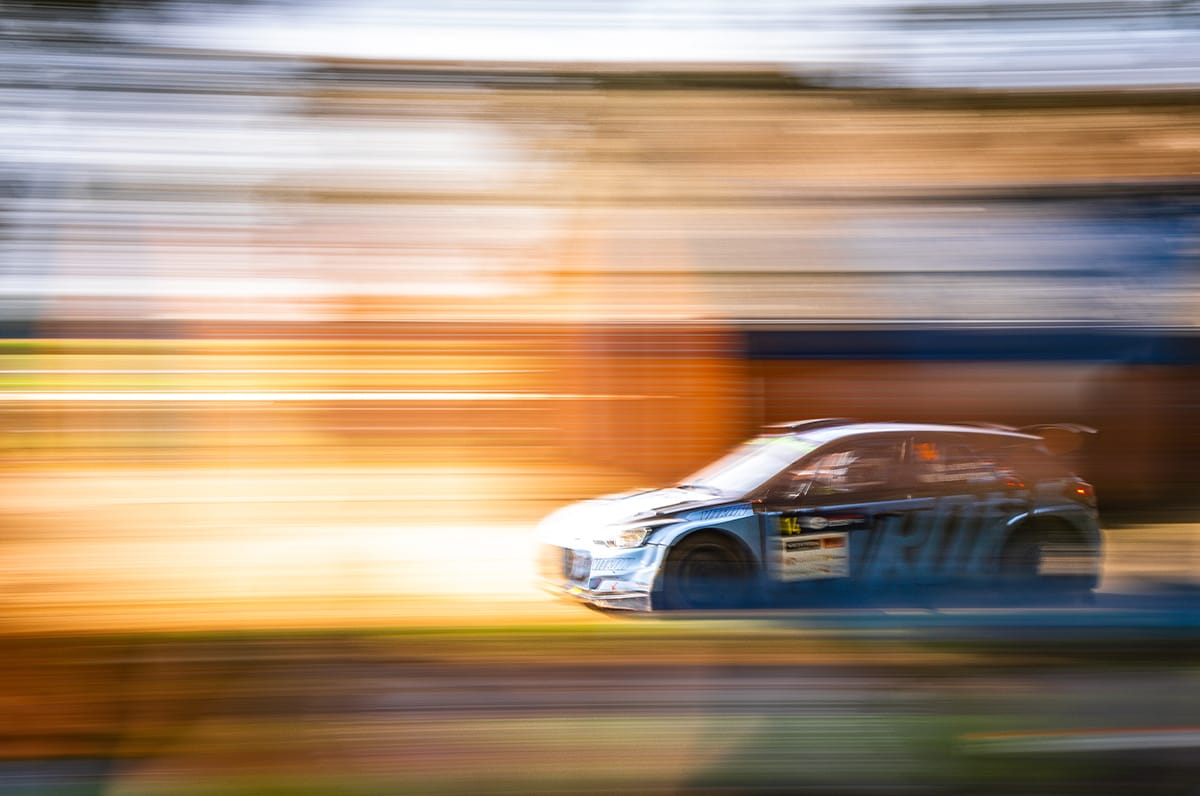
Frustrating blurry images, missed action moments and race cars that seem to stand still in your photos – recognizable? Motorsport photography can be relentless, even with the best equipment. You travel to events, take hundreds of photos, but return home disappointed with mediocre images.
The solution? Panning. By moving your camera smoothly with your subject and using a slower shutter speed, you can capture a moving car in pin-sharp focus while the background fades into smooth lines. The result: dynamic images where speed and action really come alive.
What is panning and why is it important?
Panning is a technique where you move your camera along with a moving car and use a relatively slow shutter speed. The goal is to bring the vehicle into sharp focus while blurring the background (and sometimes foreground), enhancing the effect of speed.
In motorsport photography, this is one of the most powerful techniques for showing movement. Whereas a fast shutter speed freezes everything and takes the energy out of the image, panning actually creates that dynamic feel that brings a race photo to life. It takes practice, but once mastered it makes a world of difference in your images.
The right camera settings
In panning, shutter speed is the most important factor. Depending on the speed of the vehicle, shutter speeds between 1/15 and 1/125 second work well. Faster cars require faster shutter speeds, while slower vehicles can tolerate more motion blur with slower shutter speeds.
To ensure the sharpness of your subject, it is essential to use AF-C (Continuous Autofocus). Cameras such as the Sony A7C II also offer AI Autofocus and Tracking, with which the camera automatically recognizes vehicles and continues to track them. This makes it easier to keep the subject in focus, even at slower shutter speeds.
Work preferably in shutter speed priority (S/Tv) or manual mode (M). You set the shutter speed yourself, but aperture and ISO can be partly left to the camera. Auto ISO is a smart choice: this way the camera automatically adjusts the ISO value to maintain good exposure without you having to constantly adjust.
The perfect panning motion
Smooth and controlled movement is crucial in panning.
Posture and stability
Stand firmly, with your feet shoulder-width apart and one foot slightly forward. Keep your elbows close to your body and twist from the waist, not just with your arms. This prevents jerky movements and provides more stable tracking of your subject.
Tracking the car
Start your rotation even before the car comes into view and keep following the car until well after the moment of printing. Focus on a fixed point, such as the windshield or a logo on the car, and keep it in focus continuously as you move along.
Common mistakes and how to avoid them
Out of focus subject and background?
Your shutter speed may be too slow or your movement too jerky. Start with 1/125 second and lower it step by step as your technique improves.
The front or rear of the car is out of focus
This means that you have not followed through on your movement properly. Keep following the car even after you print to get a smooth result.
Busy background distracts
A cluttered background with lots of details can detract from your photo. If possible, choose a location with a quieter background so that the motion blur comes out better.
Practice and experimentation
Panning takes practice. Start with slower vehicles, such as cyclists or cars in city traffic, before switching to motorcycling. By experimenting with different shutter speeds, you quickly learn what works and what doesn’t.
A good way to start is to start with 1/125s and gradually lower it to 1/60s, 1/30s or even 1/15s for a more dramatic motion blur effect. Every situation is different, so testing and adapting is essential.
Get on with it
Panning can be challenging at first, but the rewards are great. By refining your technique and experimenting with shutter speeds, autofocus and composition, you can create spectacular racing photos that truly showcase the speed and energy of motorsports.
Grab your camera, go out and start practicing today. The more you train, the better you get – and before you know it, you’re creating images that really capture the feeling of speed.