From speed to silence: The great contrast between rally and wildlife
Rally is about anticipating a fraction of a second. Wildlife is about patience. The techniques overlap more than you would think: panning on running antelope, golden hour on cars, and which lens goes where.
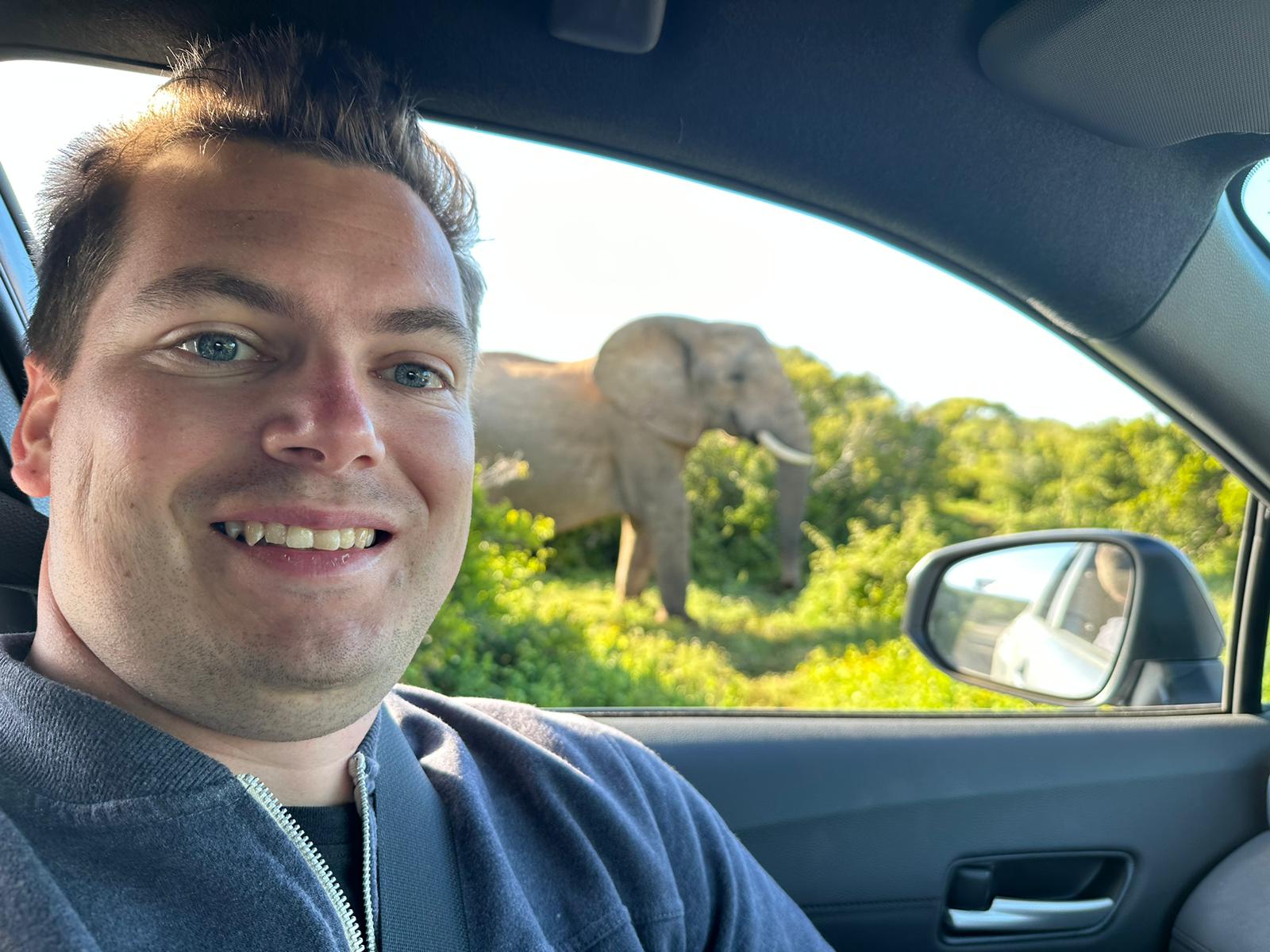
When I started photographing, my focus was entirely on motorsports. The dynamics, speed and challenging conditions made rally photography an exciting discipline. But besides the smell of gasoline and the dust of the track, I always had another passion: animals. Whenever I went to the zoo I always took my camera with me. Although I enjoyed photographing animals there, it felt different. It wasn’t until 2023, during my first trip to South Africa, that I discovered the beauty of true wildlife photography.
The Garden Route and Addo Elephant Park brought me face to face with wild animals in their natural habitat. Here I realized how intense and magical capturing wildlife can be. Where rally is about speed and split-second anticipation, wildlife photography is about patience, observation and capturing the perfect interaction between animal and nature. Seeing an elephant in the wild for the first time was perhaps the greatest moment of that trip.
Techniques: What remains the same and what is different?
Although rally and wildlife photography seem completely different at first glance, I discovered that some techniques do overlap.
Panning
In auto racing, I use panning to show speed and create a dynamic effect. In wildlife, this technique can work surprisingly well, for example with running animals such as antelope or hunting predators.
Composition
In both disciplines, it is crucial to frame the right balance. With rally, I try to frame the action with the environment, while with wildlife, the natural habitat and behaviors of the animal are just as important.
Light use
In rally it’s mostly about what’s there in terms of light-you have to work with the conditions, whether bright sun, rain or dust clouds. In wildlife, you have more control and the use of soft morning or evening light plays a much larger role in the mood of the photograph.
From the wildlife I also take things back to the rally, like trying to look better at light and adjust the schedule accordingly. Because the golden hour works not only for lions, but also wonderfully with cars. So you’re constantly learning new things through this as well.
Materials: what do you need?
For both disciplines, I mainly use the same gear. My Sony A7C II and Sony A9 go along as bodies and I always have the Sony 24-105mm f/4 with me. A great lens that never lets me down.
The biggest difference, however, is in the telephoto lens. At rally, the Sony 70-200mm f/4 goes on the second body. This one is compact and not too heavy, making panning with it doable. Unlike the Tamron 150-500mm, for a super-telephoto lens it is compact and light, but it is no small one. I use this lens most often in my wildlife. It allows me to capture the animals at a distance without disturbing them, as well as making nice close-ups of their heads.
The biggest difference is in the workflow. In rallying, speed is essential. Photos often have to be delivered the same day to teams, media or sponsors. In wildlife, I take my time. I carefully edit the images and place them in online galleries or offer them as prints.
What gives the most satisfaction now?
My passion for photography started with rally, of course; that will always be a first love. However, I find wildlife increasingly satisfying. Observing animals in their natural habitat, waiting for that one perfect moment and the tranquility that nature exudes, give a completely different experience than the hectic pace of a rally. Besides, there is nothing better than capturing wildlife where they belong.
But also showing how the animals live and seeing special animals is satisfying. If you’re looking for a leopard and then you find one, your day can’t go wrong. Seeing a rarer species in a park, such as a rhino in Addo Elephant Park or a southern hornbill in Kruger, also makes you feel good. Not to mention the beautiful landscapes you will encounter.
Rally continues to be great and provides many great experiences and I am certainly not going to part with that either. There is much beauty to be captured in that as well; the 2020 Dakar Rally, for example, was truly a unique experience. So I continue to do both with great pleasure.
Would you also like to look at another discipline?
The most important tip: just go do it! Whether you go from abstract photography to weddings or, like me, from motorsports to wildlife: photography is beautiful! Many techniques you know can be used in other disciplines. Going outside your comfort zone creates new perspectives and also causes you to see things differently in your original discipline.
So enjoy both worlds and let your passion guide you!